

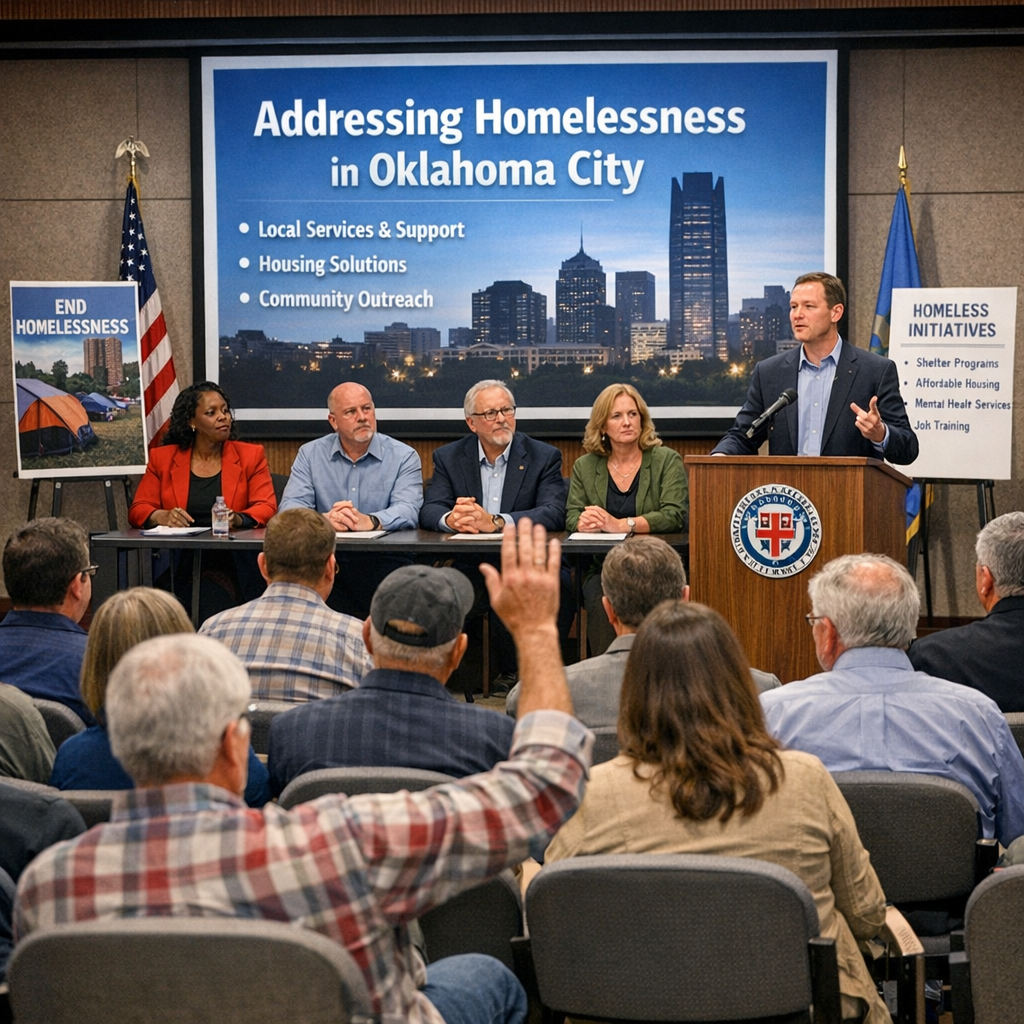
Homelessness remains a pressing issue in Oklahoma City, with recent data indicating a rise in families and unaccompanied youth experiencing housing instability. The 2026 Point-in-Time Count revealed that while overall homelessness saw a slight decline, family homelessness increased by 5%, and unaccompanied youth homelessness grew by 11%, marking the highest levels since at least 2005.
Community Initiatives
In response, the city has launched several initiatives aimed at mitigating this crisis. The Key to Home Partnership, a collaboration of over 40 agencies, set a goal in 2023 to pair housing with comprehensive services to house 500 individuals by the end of 2025, aiming to reduce the unsheltered population by 75%. Efforts are ongoing to meet this ambitious target.
Additionally, the state finalized a deal in March 2026 to allocate $800,000 for housing and services for approximately 40 individuals displaced by the clearing of homeless encampments. This marks a significant step, as it’s the first time the state has agreed to fund housing for the homeless in Oklahoma City.
Challenges Ahead
Despite these efforts, challenges persist. Rising costs, limited affordable housing, and economic pressures continue to push families into crisis. The city’s dispersed development pattern has also led to the loss of prime agricultural lands and natural features, further complicating the housing landscape.
Addressing homelessness in Oklahoma City requires a multifaceted approach, combining immediate relief efforts with long-term strategies to ensure housing stability for all residents.