

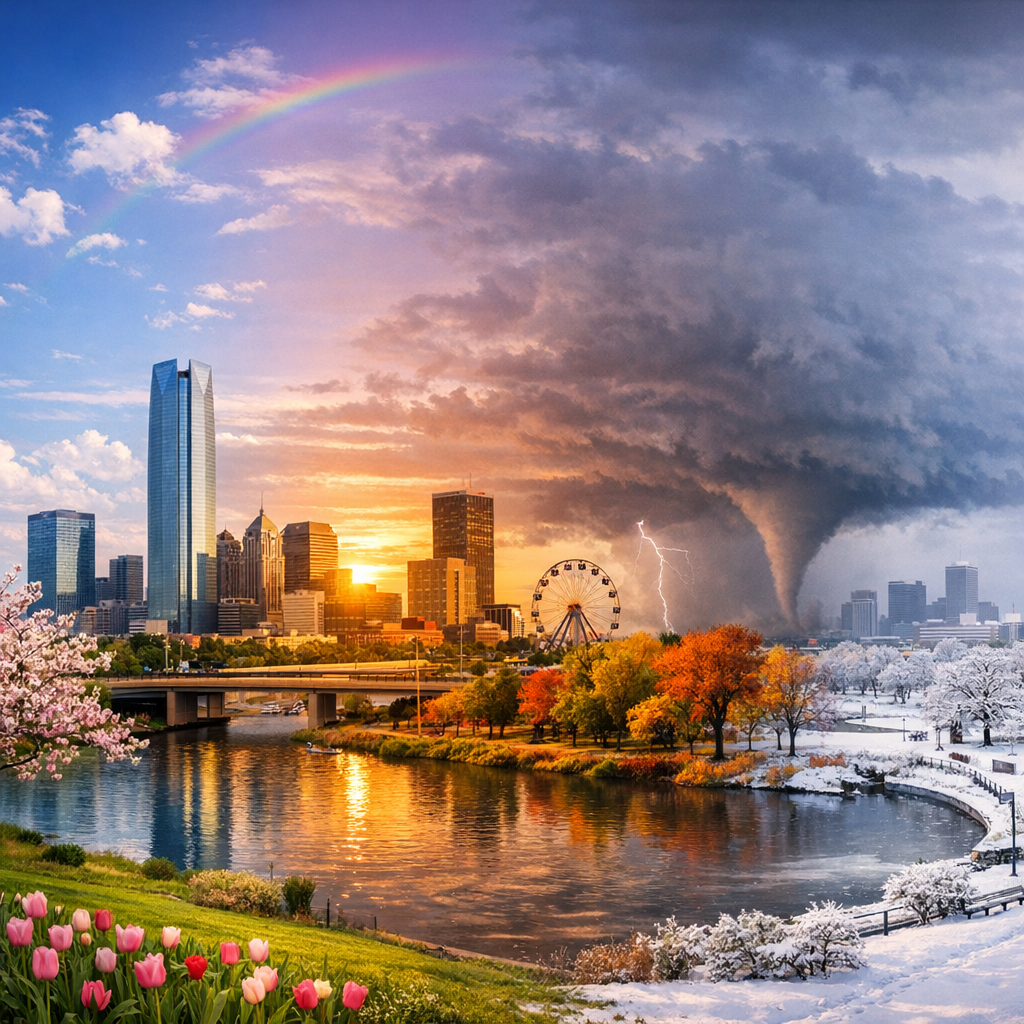
Oklahoma City experiences a temperate humid subtropical climate, characterized by hot, humid summers and cool winters. This climate results in significant seasonal variations that influence both the environment and residents’ daily activities.
Seasonal Weather Patterns
Spring
Spring in Oklahoma City is marked by mild temperatures and increased rainfall. Average highs range from 60°F (16°C) in March to 77°F (25°C) in May. This season also brings a heightened risk of severe weather, including thunderstorms and tornadoes, due to the clash of warm, moist air from the Gulf of Mexico with cooler air masses from the north. Residents should stay informed about weather forecasts and have a safety plan in place during this period.
Summer
Summers are typically hot and humid, with average high temperatures peaking around 93°F (34°C) in July. The city often experiences heatwaves, and the combination of heat and humidity can make outdoor activities challenging. Thunderstorms are common, sometimes leading to flash flooding. It’s essential to stay hydrated and take precautions against heat-related illnesses during these months.
Autumn
Autumn offers a reprieve from the summer heat, with temperatures gradually cooling to average highs of 62°F (17°C) by October. This season is generally pleasant, with lower humidity and reduced chances of severe weather, making it an ideal time for outdoor activities.
Winter
Winters are cool and can be unpredictable. Average highs in January are around 49°F (9°C), with lows dipping to 29°F (-2°C). Snowfall is relatively light, averaging less than 10 inches annually, and snow rarely stays on the ground for long. However, occasional ice storms can occur, leading to hazardous conditions. Residents should be prepared for sudden temperature drops and winter precipitation.
Environmental Considerations
The city’s climate influences various environmental factors:
- Air Quality: Vehicle emissions are a significant contributor to air pollution in Oklahoma City. The city is at risk of exceeding air quality standards, particularly concerning ground-level ozone. Efforts to reduce emissions and promote alternative transportation methods are crucial for maintaining air quality.
- Urban Heat Island Effect: The predominance of concrete and asphalt in urban areas leads to higher temperatures compared to surrounding rural regions. This effect can exacerbate heatwaves and impact energy consumption. Increasing green spaces and tree canopy coverage can help mitigate this phenomenon.
- Water Resources: Seasonal rainfall patterns affect water availability. While spring and early summer bring more precipitation, periods of drought can occur, impacting water supply and agriculture. Sustainable water management practices are essential to address these challenges.
Understanding Oklahoma City’s climate is vital for residents and policymakers alike. By recognizing seasonal patterns and their environmental impacts, the community can better prepare for weather-related challenges and work towards a more sustainable future.